Nixopix
Data Science
Data Science · ML · LLM & RAG

Weather Prediction System

Case Study: Weather Prediction System — machine learning, deep learning neural networks, and an LLM + RAG insight layer on top of disciplined forecasting pipelines.

Salesforce & AIFull-Stack EngineeringDevOps & Cloud Architecture
Discuss Similar Work
Hero graphic
DL

Neural Nets

LLM

+ RAG

Back to Case Studies
Data Science · ML · LLM & RAG

Weather Prediction System

Machine Learning & AI Engineer

Case Study: Weather Prediction System — machine learning, deep learning neural networks, and an LLM + RAG insight layer on top of disciplined forecasting pipelines.

Data ScienceMachine LearningDeep Learning (Neural Networks)LLMRAGPythonData Pipelines

DL

Neural Nets

LLM

+ RAG

Eval

Accuracy

Py

Stack

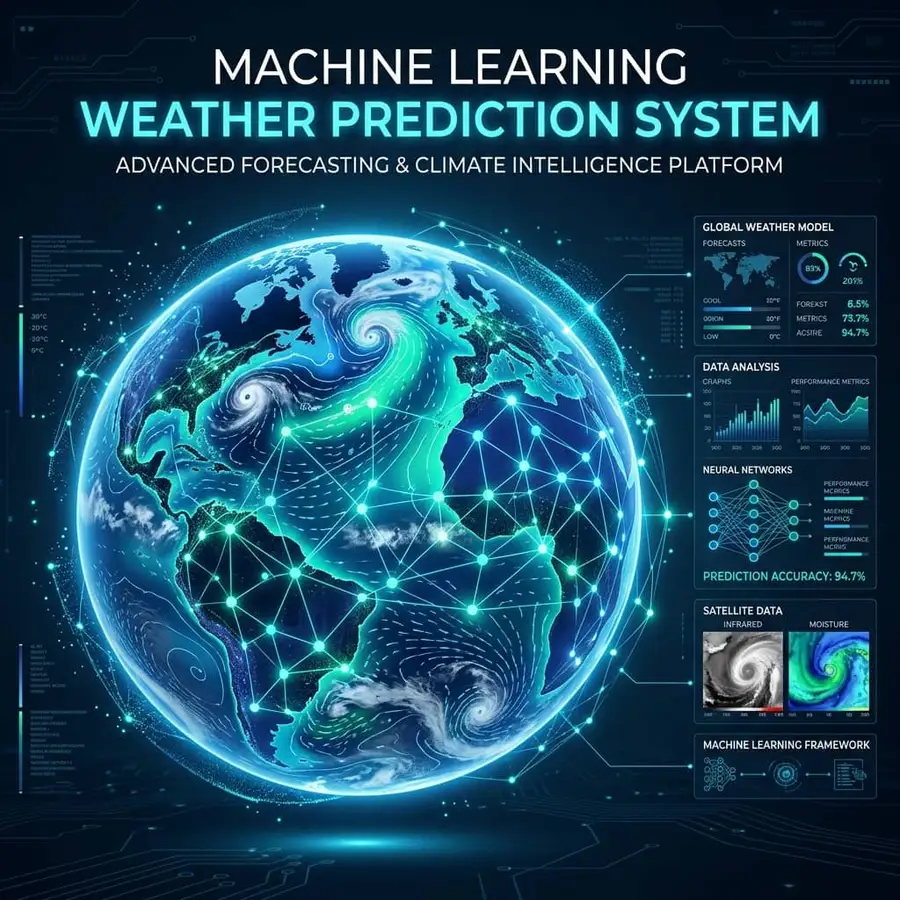
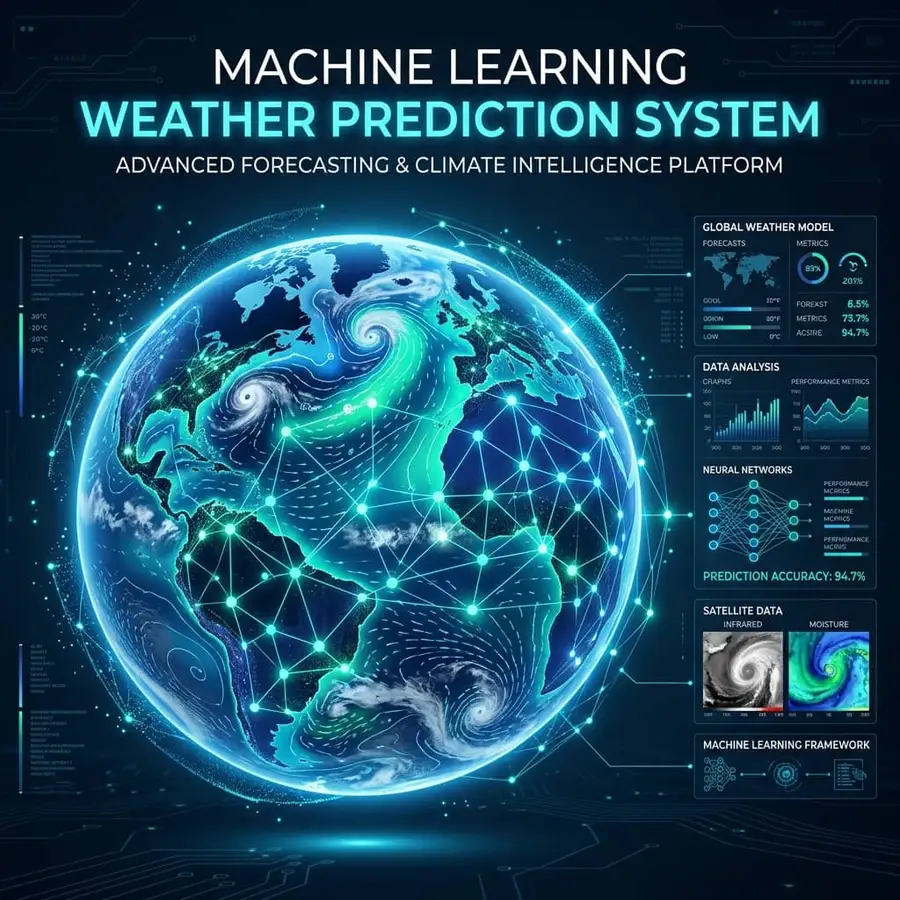
Weather Prediction System overview

Executive Summary

The goal was to move beyond simple historical averages toward models that learn patterns in weather history — then make those predictions understandable with modern AI.

We built deep learning neural networks in Python with preprocessing and evaluation pipelines, then layered LLM and RAG capabilities so forecasts become grounded, explainable insights for operators.

Product UI

Project Screens

Salesforce Lightning Web Component screens from the loan origination platform — application intake, underwriting risk assessment, and pipeline Kanban — each built for financial services lending teams.

Deep Learning Forecast Model — Salesforce loan origination platform UI
Screen 01

Deep Learning Forecast Model

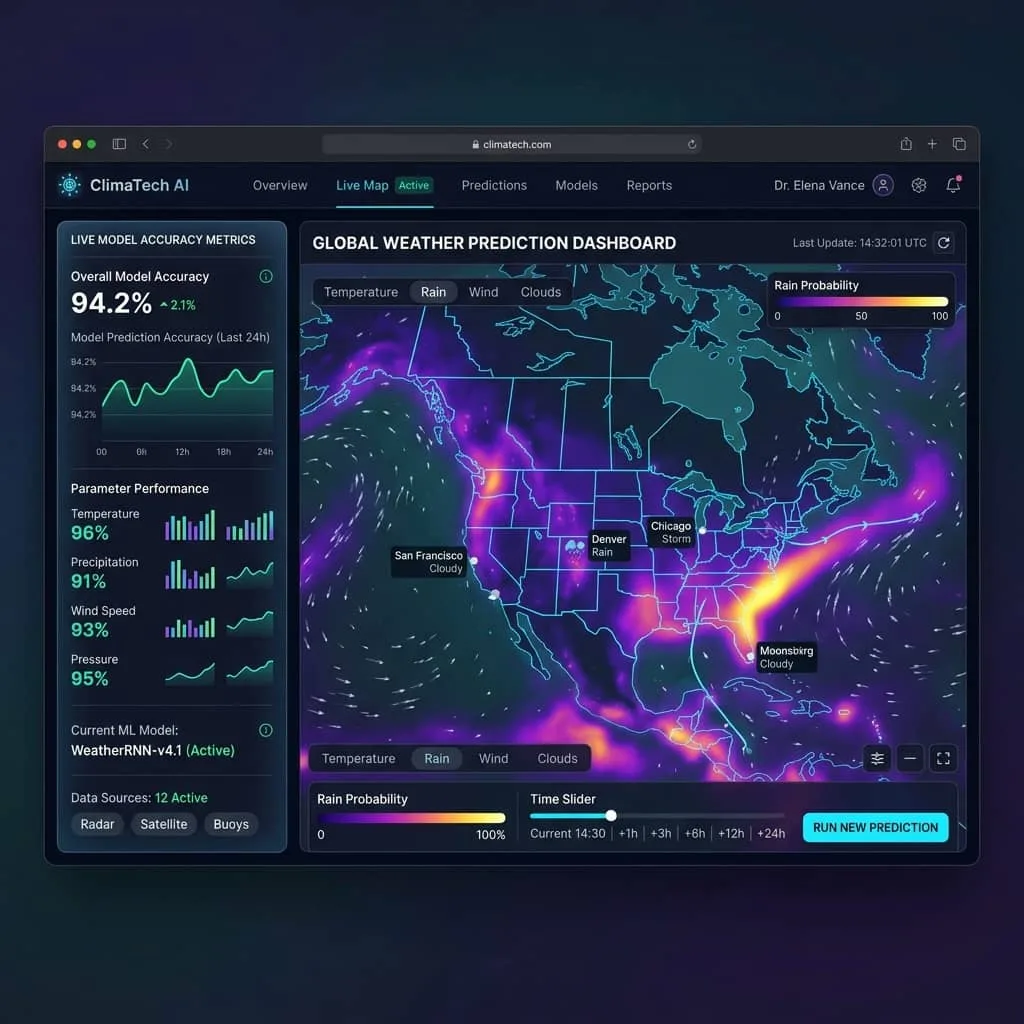
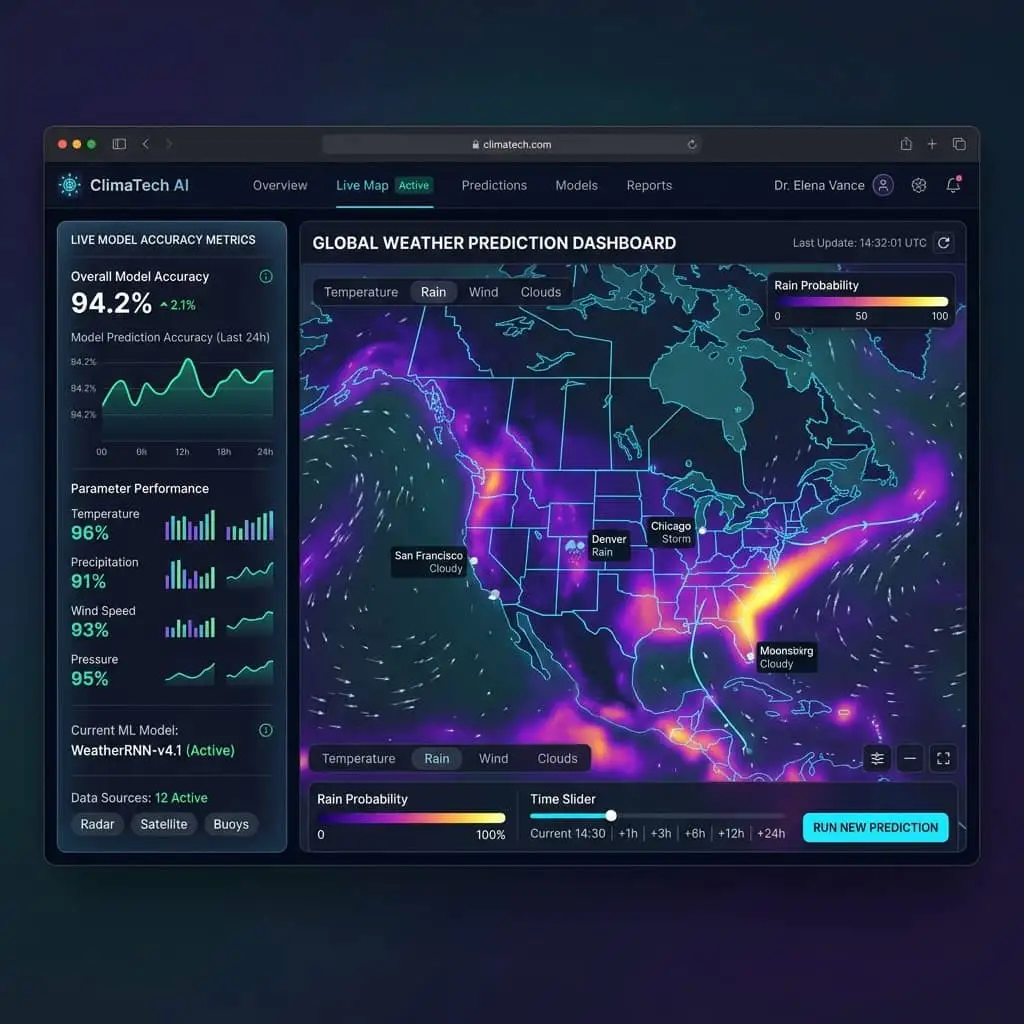
Neural networks and deep learning models trained on historical weather signals for predictive forecasts.

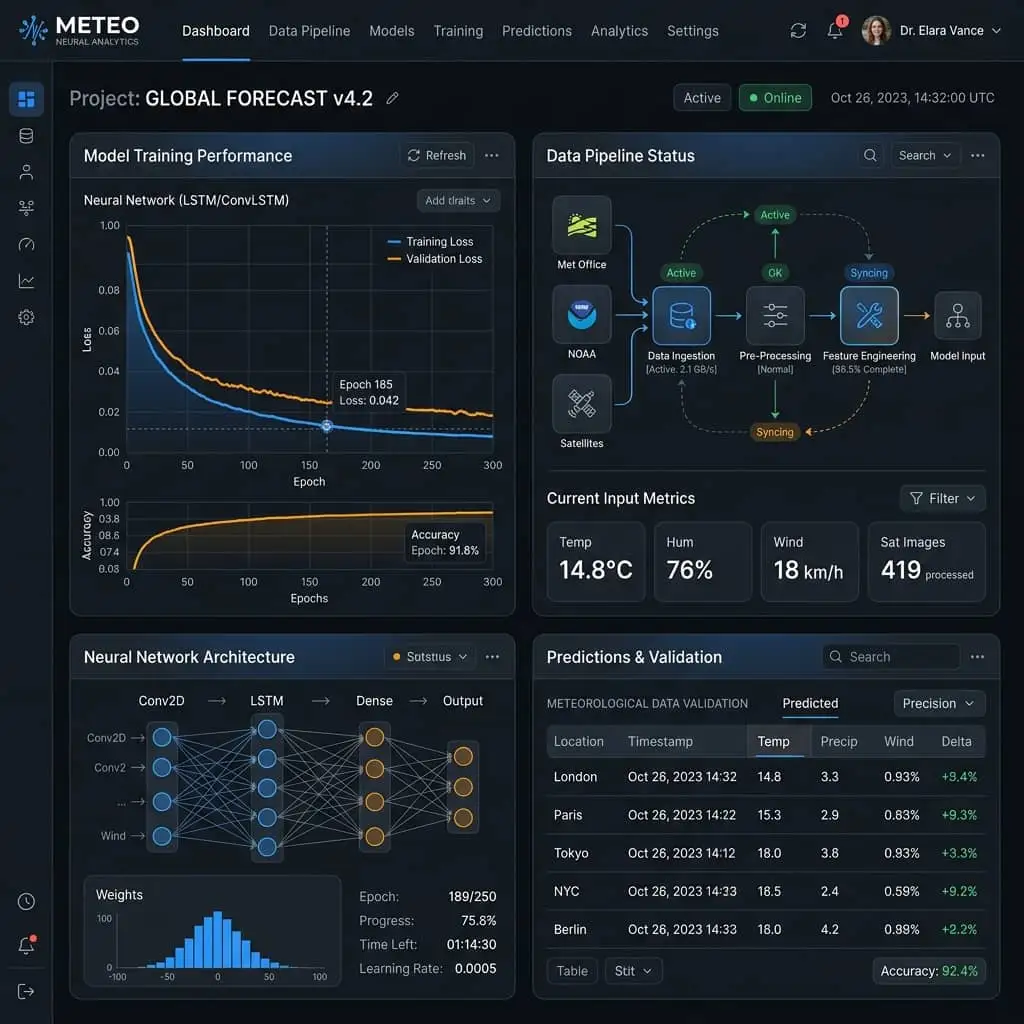
The Deep Learning Forecast Model moves beyond historical averages. Multi-layer neural networks learn non-linear patterns in weather history to produce forward-looking forecasts — forming the predictive core of the stack.

  • Deep learning neural networks for weather forecasting
  • Training on cleaned historical weather datasets
  • Forward-looking predictions beyond averages
  • Python ML stack for model development and iteration
Deep LearningNeural NetworksMachine LearningPython
Preprocessing & Evaluation Pipeline — Salesforce loan origination platform UI
Screen 02

Preprocessing & Evaluation Pipeline

Historical data preprocessing and evaluation pipelines validate forecast accuracy before release.

The Preprocessing & Evaluation Pipeline cleans and transforms historical weather data, then validates forecast accuracy against held-out periods before predictions are used operationally.

  • Data cleaning and transformation pipelines
  • Held-out evaluation for forecast accuracy
  • Reproducible preprocessing for model training
  • Quality gates before generating future predictions
PythonData PipelinesModel Evaluation
LLM & RAG Weather Insights — Salesforce loan origination platform UI
Screen 03

LLM & RAG Weather Insights

Large language models with retrieval-augmented generation turn forecasts into grounded, explainable weather narratives.

An LLM + RAG layer retrieves curated forecast embeddings, station metadata, and model outputs so generated briefings stay factual. Analysts get natural-language explanations of model confidence, anomaly drivers, and recommended actions — without hallucinated meteorology.

  • RAG retrieval over forecast embeddings and station context
  • LLM-generated briefings grounded in model outputs
  • Explainable confidence and anomaly narratives
  • Modern AI terminology baked into the analyst workflow
LLMRAGEmbeddingsGenerative AI

The Challenge

Average-based forecasts lacked learning capacity, and raw model outputs were hard for non-ML stakeholders to interpret.

  • Historical averages missed complex weather patterns.
  • Raw data needed cleaning before deep learning training.
  • No rigorous evaluation against held-out history.
  • Stakeholders needed LLM-readable explanations without hallucination risk.

The Solution

We implemented a Python ML / deep learning system with neural forecasts, evaluation pipelines, and an LLM + RAG insight layer.

Key Features & Technical Implementation

01

Deep Learning Forecast Models

Neural networks learn patterns from historical weather data.

Technical Detail: Deep learning models trained for predictive forecasting beyond averages.

02

Data & Eval Pipelines

Clean, transform, and validate before release.

Technical Detail: Preprocessing plus held-out evaluation for accuracy checks.

03

LLM + RAG Insights

Grounded natural-language briefings on top of model outputs.

Technical Detail: Retrieval-augmented generation over forecast embeddings and station metadata.

Technical Architecture

Historical weather data flows through preprocessing, trains deep learning neural networks, passes evaluation gates, then feeds an LLM + RAG layer that retrieves grounded context before generating analyst-facing insights.

The Results

DL

Neural Nets

Deep learning for weather prediction.

LLM

+ RAG

Grounded generative insights on forecasts.

Eval

Accuracy

Held-out validation before release.

Py

Stack

End-to-end ML and modern AI workflow.

  • Deep learning models for predictive weather forecasting
  • Repeatable data preparation and evaluation pipelines
  • LLM + RAG narratives grounded in real model outputs
  • Python ML foundation ready for agentic and generative AI extensions

Technology Stack

Machine LearningDeep Learning (Neural Networks)LLMRAGPythonData Pipelines

Conclusion

A disciplined ML pipeline plus LLM and RAG turned historical weather data into validated neural forecasts — and explanations teams can trust.